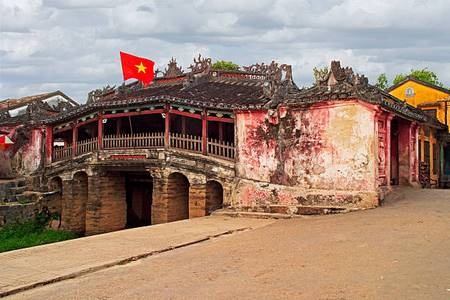
Japanese Covered Bridge
Lai Viễn Kiều
Japanese Covered Bridge
Lai Viễn Kiều
The main symbol of Hoi An, a historic 16th-century bridge connecting the Japanese and Chinese quarters.
Hoi An
Historical Site
Cultural Heritage
The Japanese Covered Bridge (Chùa Cầu) is an architectural gem and the symbol of Hoi An. Built by the Japanese trading community in 1593, this unique structure is part of the UNESCO World Heritage site and is even featured on the Vietnamese 20,000 dong banknote. Following a major restoration completed in 2024, the bridge has returned to its pristine glory.
- Duration
30–60 minutes
- Average budget
120,000 ₫ (ticket)
- Admission
Free (bridge), 120,000 ₫ (temple)
- Best months
Feb – Apr, Sep – Nov
- Local language
Vietnamese, English
What you need to know
Measuring 18 meters long, the bridge combines Japanese construction techniques with Vietnamese aesthetics. Its wooden structure with stone pillars is adorned with carved patterns and a recognizable dark maroon tiled roof. At the center of the bridge stands the Chùa Cầu pagoda, dedicated to the Taoist deity Tran Vo, who protects the city from disasters. Statues of dogs and monkeys flank either side of the entrances, symbolizing the years of construction (1592–1593 in the lunar calendar).
Dry season with comfortable temperatures. It is best to visit the bridge early in the morning to avoid large tourist crowds.
On site
- How to get there
Walking through the old town
- Transport
Bicycle/electric cart
- Cash
Required for ticket purchase
- Attire
Modest clothing required at the temple