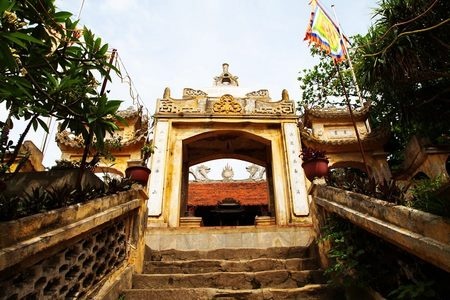
One Pillar Pagoda
Chùa Một Cột
One Pillar Pagoda
Chùa Một Cột
A unique Buddhist temple in Hanoi, erected on a single stone pillar as a symbol of lotus purity.
Hanoi
Buddhist temple
Cultural heritage
The One Pillar Pagoda is one of Vietnam's most iconic shrines. This place is interesting not only for its unique architecture resembling a blooming lotus flower, but also for its deep spiritual history associated with Emperor Lý Thái Tông. Visiting the temple allows you to experience Hanoi's centuries-old culture.
- Visit duration
1 hour
- Average budget
Free
- Admission
Free
- Current
26 °C, clear
- Best months
June – August
- Local language
Vietnamese, English
What you need to know
The temple was built in 1049 by Emperor Lý Thái Tông. According to legend, after the bodhisattva Avalokiteshvara appeared to the emperor in a dream and presented him with an heir, he ordered the sanctuary to be built as a sign of gratitude.
The architectural feature of the pagoda is its construction: the wooden structure rests on a single stone pillar 1.25 meters in diameter and 4 meters in height. The entire complex is designed to resemble a lotus flower—an important Buddhist symbol of purity rising from muddy waters.
Despite its destruction in 1954, the Ministry of Culture of the Democratic Republic of Vietnam restored the structure in 1955, strictly following traditional Nguyen Dynasty designs. Today it is an active temple and a vital symbol of the capital. Visiting is especially pleasant from June to August, when the artificial ponds are filled with blooming lotuses.
The best time to visit when the lotus flowers in the ponds are in full bloom, giving the pagoda its most impressive appearance.
On-site
- Getting there
Ba Đình district, Chùa Một Cột St., near the Ho Chi Minh Mausoleum.
- Accommodation
Central Hanoi hotels from $15
- On-site
Walking tour of the neighborhood
- Cash
Recommended for buying souvenirs
- Connectivity
4G, Wi-Fi in city cafes
- With children
Fine for all ages